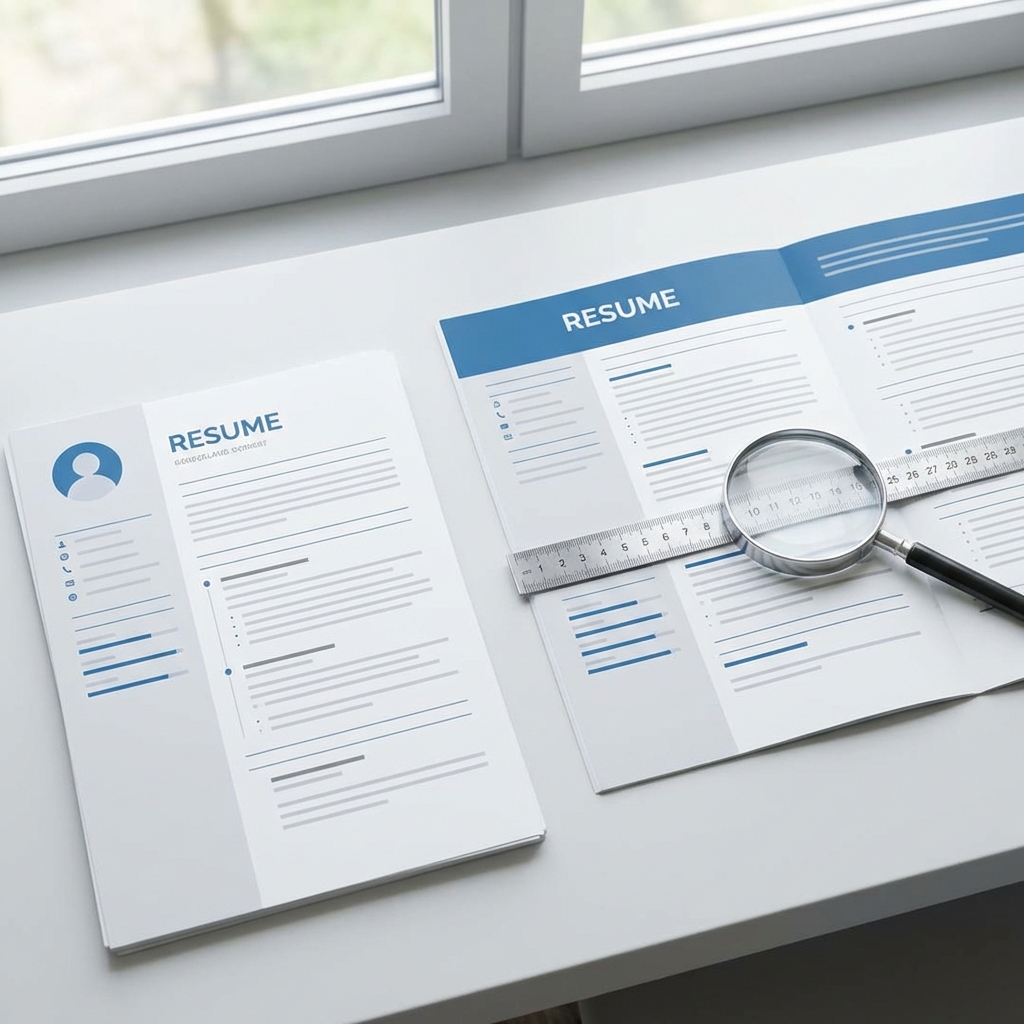
One of the oldest debates in the hiring world is the "One Page Rule." Some experts insist that a resume should never exceed a single sheet of paper, while others argue that two pages are necessary to show full value. In 2026, as recruitment moves toward more nuanced AI screening and digital-first reading, the "rule" has changed.
The new rule: Relevance outweighs length. However, there are still specific guidelines you should follow to avoid overwhelming recruiters and robots alike.
When to Stick to One Page
A single-page resume is powerful. It forces you to be concise, highlights your most significant achievements, and is perfect for quick reading on mobile devices. You should keep it to one page if:
- You are a Junior or Entry-Level Candidate: If you have less than 5-8 years of experience, you likely don't have enough high-impact content to justify a second page.
- You are making a radical career change: Focusing on your transferable skills on one page is more effective than listing irrelevant past jobs.
- You are applying for a technical role: Where a list of core competencies and 2-3 key projects carries more weight than a long history.
When Two Pages are the Smart Move
Gone are the days when a second page was a death sentence for your application. In many cases, it is actually expected. You should consider two pages if:
- You are a Senior Professional or Executive: If you have 10+ years of leadership and measurable results, a single page might sell you short.
- You are in Academia or Research: Where publications, grants, and teaching experience require more space.
- You have a large portfolio of relevant projects: Especially in engineering, project management, or consulting.
The "6-Second Rule" in 2026
Recruiters still spend an average of 6-10 seconds on the first pass. This means that Page 1 must contain everything necessary to win you the interview. Page 2 is for deep-dive validation once you've already piqued their interest.
The Risks of "Too Much"
While two pages are acceptable, three or more are almost universally avoided (unless you're writing a full Academic CV). Long resumes often suffer from:
- Keyword Dilution: The more you write, the less "weight" each keyword has in some ATS algorithms.
- Decision Fatigue: If a recruiter has to scroll forever to find your core value, they might just move to the next candidate.
- Irrelevant History: Do they really need to know about your summer internship from 15 years ago? (Short answer: No).
"Your resume is a highlight reel, not a documentary."
How to Optimize Your Length
If you're struggling to fit everything on one page, or your two pages feel "thin," try these strategies:
- Audit your bullets: Remove anything that doesn't show a result or a specific skill.
- Use a modern layout: Two-column designs can often fit 30% more information without looking cluttered.
- The 10-Year Cutoff: Generally, anything older than 10-15 years can be removed or summarized in a single line.
Conclusion: Quality Wins
A perfect one-page resume is better than a mediocre two-page resume. But a high-impact two-page resume is better than an overcrowded one-page resume. Focus on the value you bring to the specific job you're applying for.
Unsure if your resume is the right length? CVByAI offers dynamic templates that automatically adjust to your content, ensuring you always look professional, whether you’re a junior prodigy or a seasoned veteran.