Applying for a federal job is not like applying to a private-sector company. If you send a sleek, two-page, bullet-point-heavy resume to USAJOBS, you are essentially setting your application on fire before a human ever sees it.
The federal hiring process is rigid, bureaucratic, and highly automated. But here is the secret: it is also predictable.
If you play by the federal rules, you don't just stand a chance—you become the candidate the algorithm is looking for. In this guide, I’m going to show you exactly how to structure your resume to hit every checkpoint the Office of Personnel Management (OPM) requires.
The "Federal Resume" Reality Check
In the private sector, recruiters spend about 6 seconds scanning your resume. In the federal world, the system (and the HR specialist) spends much longer—because they are legally required to verify your qualifications against the specific job announcement.
Here’s the thing: They don't want a summary. They want a comprehensive history.
Your resume needs to be a detailed roadmap of your professional life, proving you have the "Specialized Experience" required for the GS-level you are applying for. If it’s not on the paper, it didn’t happen.
The One Strategy That Changes Everything
Most candidates make the mistake of having one "master resume." This is a fatal error. To succeed in the federal sphere, you must mirror the job announcement.
Take the "Qualifications" section of the USAJOBS posting. Take those keywords, the specific duties, and the specialized experience requirements, and weave them into your work history.
Why does this work? Because federal HR specialists use a scorecard. They are looking for specific keywords that match the job description. If your resume uses different terminology, you get a zero score on that line item.
A Concrete Example
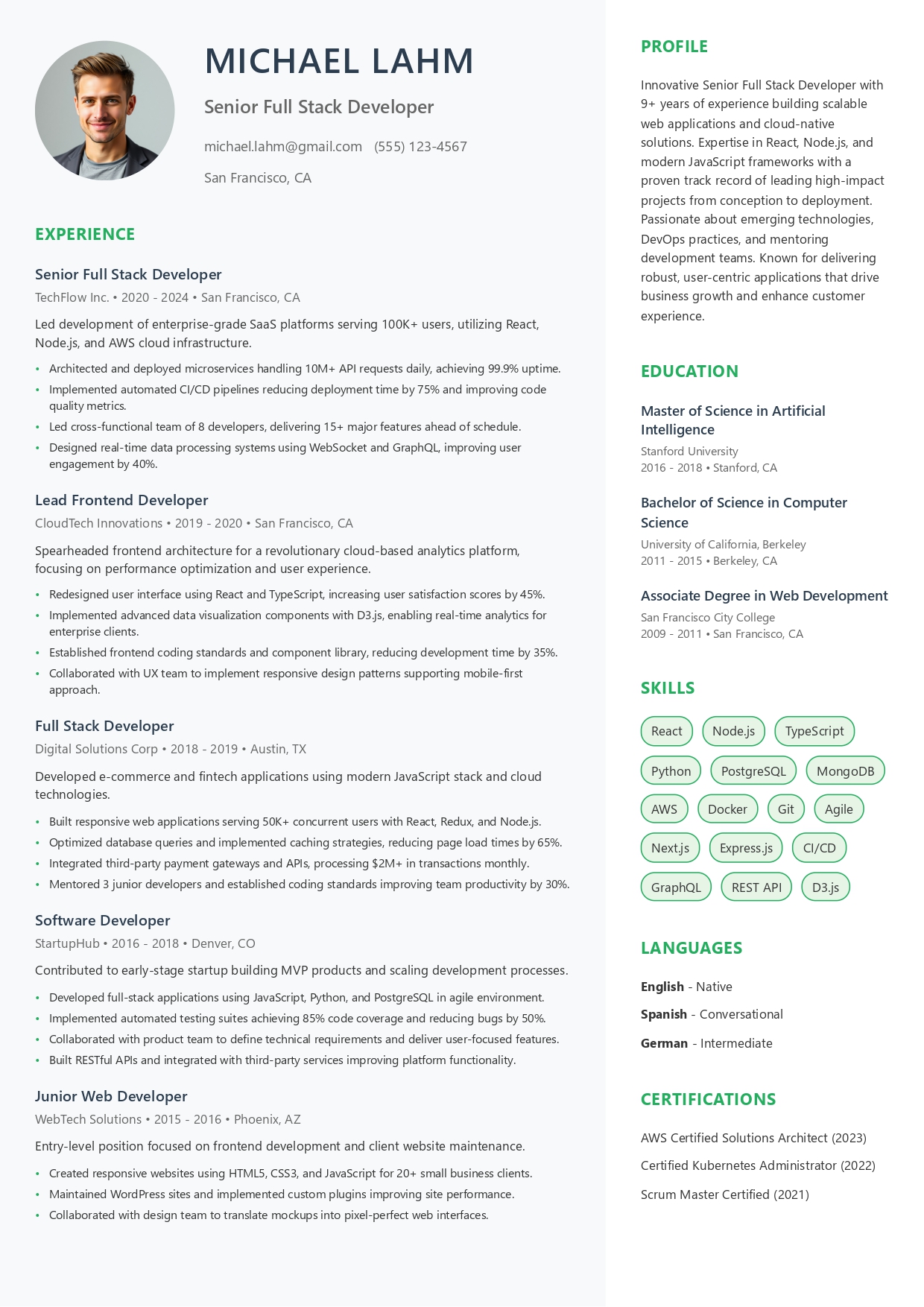
Look at this structure below. This is what a compliant, high-performing federal resume looks like:
Step-by-Step: Constructing Your Federal Resume
Ready to get started? Let’s break down the mandatory sections.
1. The Header and Personal Details
Unlike private resumes, you need specific data here. Include your full name, mailing address, email, phone number, and—crucially—your Citizenship status. If you are a veteran, include your preference status clearly at the top.
2. The "Federal Experience" Section
This is where the magic happens. For every job, you must include:
- Job Title (include the series and grade if federal experience).
- Employer name and address.
- Salary (even if it’s private sector, estimate it if necessary).
- Hours per week (Full-time or Part-time).
- Dates (Start and End dates).
Here is the kicker: Do not just list your duties. Use the "Challenge-Action-Result" (CAR) method, but ensure you anchor every result with the skills listed in the job posting.
Pro Tip: Federal resumes are often 4 to 6 pages long. Do not worry about keeping it to two pages. Detail is your best friend in government hiring.
Leveraging Technology to Win
Writing 6 pages of highly technical, keyword-optimized content is exhausting. It's also prone to human error. That is where artificial intelligence changes the game.
At CVbyAI, we’ve analyzed thousands of successful federal job applications. We’ve built tools that help you map your experience directly to the OPM standards without spending days formatting in Microsoft Word.
Create My ResumeAvoiding the "Self-Disqualification" Trap
Believe it or not, many candidates disqualify themselves by not answering the "Assessment Questionnaire" honestly or by failing to back up their self-ratings in the resume.
If you rate yourself as an "Expert" on the questionnaire but your resume doesn't show at least 52 weeks of experience at the next lower grade level in that specific task, you will be booted from the certification list immediately.
The Final Checklist Before You Submit
Before you click "Apply" on USAJOBS, run through this list one last time:
- Did I include the salary and hours per week for every job?
- Did I include the supervisor’s name and contact information?
- Are my dates in MM/YYYY format?
- Did I include my social security number or USAJOBS ID?
- Did I use the exact keywords from the "Specialized Experience" section of the job post?
Conclusion: The Path Forward
Securing a federal position is a marathon, not a sprint. It takes preparation, precision, and a willingness to provide the level of detail that the government demands.
Stop trying to fit your experience into a one-page private sector template. Embrace the length, target the keywords, and use the right tools to build a document that actually reflects your true value as a federal employee.